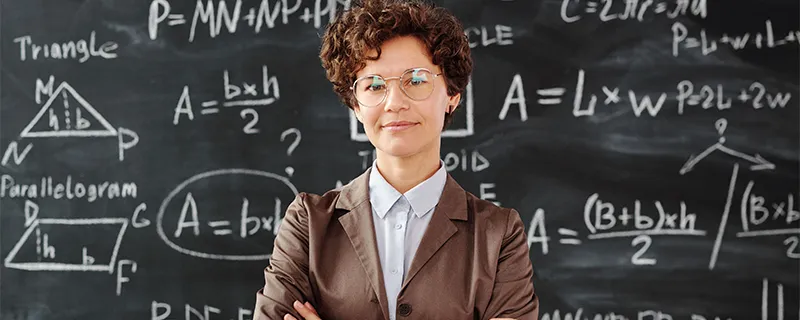
What makes someone an expert in their respective field?
Is it the length of time in their role, their level of seniority, the amount of knowledge they have or is it the successful application of this knowledge that sets them apart?
When considering what makes someone an ‘expert teacher’, some researchers consider all of these factors, whilst others use more limited measures and definitions of expertise. Recently, however, researcher have aimed to fill this gap, providing us with interesting insights on how schools and teachers could measure, evaluate and work on developing skilled teachers.
The research into becoming an expert teacher
Research into expert teaching has historically lacked consistency in measurement and, as a result, has produced inconsistent findings. To resolve this, a recent meta-analysis collated 45 studies into expert teaching, all using various measures such as eye-tracking, surveys, behavioural experiments and behavioural coding. They then analysed the differences these studies found between great and novice teachers against three key dimensions of teaching: Knowledge, Skill and Judgement.
Across the 45 studies, expert teachers were found to:
- Have better knowledge of teaching strategies
- Be more likely to facilitate and support students’ critical thinking patterns
- Be better at classroom management
- Have more complex scan paths, using a more rapid and student-centred gaze pattern
- Have better instructional judgement (Knowing when to weave certain topics and lessons together)
- Be more flexible
- Ask significantly more questions
Meanwhile in some studies, novice teachers were found to:
- Be more concerned with maintaining behavioural norms
- Have better technical pedagogy knowledge for Mathematics, according to one study
Overall, the meta-analysis found significant differences between great and novice teachers across all of the different studies, specifically in Judgement and Skill.
It is important to recognise that, despite skilled teachers outperforming novices in almost all of the measures, this doesn’t mean that novice teachers are ‘bad’ teachers. Some studies found evidence for expert and novice teachers performing similarly. This means every teacher has the potential to become an expert; they simply need to sharpen their existing skills to meet the expert standard.
The three dimensions of an expert teacher
From the meta-analysis findings, teachers can better understand the dimensions of great teaching and how their own levels of expertise can vary across them. Let’s look at them in more detail:
Teaching skill
Eye-tracking studies recognised the strategic and consistent visual patterns of skilled teachers. Their gaze was reported as more ‘student-centred’ and they frequently revisited all students equally. Plus, skilled teachers were also better at facilitating class discussions and critical thinking without dominating these situations. However, the significance of these findings is dependent on the length of time the researchers used to define expertise. Seasoned teachers with over 15 years of experience had a much larger advantage over novice teachers compared to expert teachers with five years. This highlights the importance of subtle instructional skills, developed through long-term practice.
Knowledge of teaching & teaching material
Interestingly, the meta-analysis did not find knowledge of teaching to be a significant measure of differences between proficient teachers and novices. Instead, application of this knowledge to judgements in the classroom is suggested to be stronger indicator.
Decision making & judgement
The results highlight adaptive decision making, flexibility and accurate evaluations of how students learn best to be key indicators of expertise. Decision-making skills were found to be the largest differentiator between skilled and novice teachers.
This suggests having knowledge about teaching is not enough on its own. The rapid and successful application of this knowledge during changing classroom situations is what makes a teacher an expert.
How to become an expert teacher
The findings point clearly to decision making and teaching skill being the most significant features of great teaching. We at InnerDrive have a few ways you can develop these skills.
- Ask your students more questions: Asking effective questions is key to unlocking critical thinking and metacognition within your students without dominating classroom discussions. Try writing down topics you would like to cover in your questions to avoid not listening to student responses as you think of a follow up.
- Build effective scaffolds: Scaffolding is another way to facilitate your students’ engagement with discussions to help them think critically. It’s important to tailor your scaffolds to each student, by paying attention to their strengths and weaknesses, and giving support only where needed.
- Build adaptable lessons over rigid structures: Key features of skilled teachers are flexibility and fluidity. Instead of strict lesson plans with little space for unexpected adjustments, try creating clear learning goals for the topic and tailor your approach to how your students respond to the lesson material.
- Build on your ‘Noticing’ skills: ‘Noticing’ is a great skill seasoned teachers have; they pay attention to student behaviour more closely. This information and pattern recognition informs expert teaching. To do this, it may be useful to train your eye gaze patterns; try distributing your attention across your students more evenly and avoid focusing on distractors.
- Put in long-term effort: To hone your skills and become a skilled teacher, we suggest you consistently apply these suggestions to your lessons to see positive a difference over time.
Final Thoughts
Becoming a great teacher isn’t based solely on memorising educational books or racking up years in the role. Instead, research recognises the practical application of this knowledge and experience to the classroom as the main difference between novice and expert.
This is great news. It means that any teacher, with appropriate effort and consistent practice, can grow their skills and mature into a skilled teacher. By applying the tips above and giving yourself time to learn from novice mistakes, you can gradually build on your skills. Expertise is not developed overnight, but every teacher is able to achieve it.