We often focus on what students study, but where and how they do that within their chosen study space can be just as influential on their learning. For a long time, research has shown that study environments do more than just passively host your students’ study sessions; they also actively shape how they learn, behave and connect.
Seating plans, classroom layout and lighting are beneficial for students’ academic progress within the classroom. But how about outside of it? With more students choosing informal environments to learn in, a recent study investigated how students shape their private and public learning environments.
Read on to learn more about:
What the research says about study environments
In a recent study of 446 students, researchers collected 1,418 photographs of study environments at different points throughout the day. These photographs represented both public (e.g., libraries, cafes) and private (e.g., bedrooms, home offices) study environments, reflecting the varied choices students now make for their place of study.
The researchers explored which features students add to their study spaces, and how those choices promote focus and self-regulation. This large dataset gives a rare window into how students actually shape their study spaces over time.
The photos revealed three main types of features: physical, technological and psychosocial, which we explore below.
Study environment: physical features
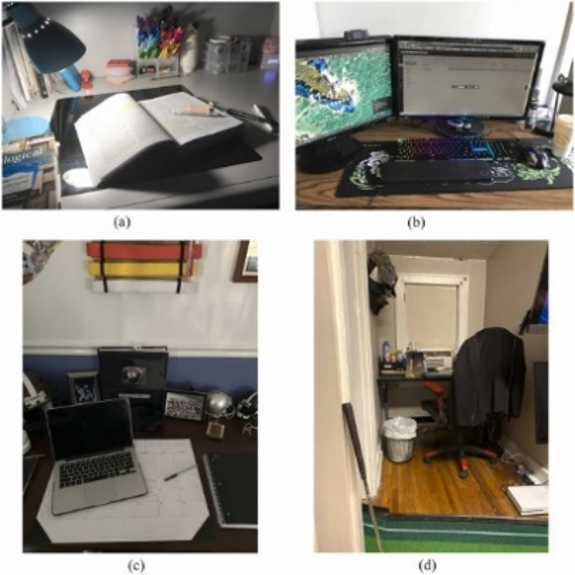
Students’ study spaces varied widely in desks, chairs and lighting. While many relied on dorm desks, clutter, poor lighting and nearby distractions (such as TVs, gaming consoles or even a golf setup, as seen in Figure d) often limited their effectiveness. Some students created distinct setups for academic work versus leisure, using environmental cues to support task-specific focus.
This reflects students’ attempts to align their study environment with task demands. However, some choices, like working in dim areas or working from a bed, may have undermined alertness.
Even small, repeated items, like a cup of coffee on the desk, act as environmental cues that help students regulate energy and attention. These sensory routines show that students use both physical and symbolic aspects of their space to stay engaged.
Encouraging your students to declutter and improve lighting can help them create more effective home study spaces.
Study environment: technological usage
Technological usage included the number of screens and their arrangement. Students may have used laptops and monitors to support multitasking and workflow. One student’s workspace featured dual monitors (Figure b), possibly in an attempt to enhance productivity. However, we also know that multitasking may put a strain on our cognitive resources and hinder productivity.
Many students combined digital and physical tools, such as dual monitors and paper planners to organise academic tasks. However, physical constraints like cramped desks, limited power outlets, or insufficient seating sometimes hindered students’ ability to fully take advantage of their setup. While extra screens can aid productivity, they can also increase distractions; therefore, students may need guidance on managing digital tools to protect deep focus.
Study environment: psychosocial cues
Psychosocial cues included the presence of personal items, working with others, and food or drink. Many added comforting items such as decorations, framed photos or sentimental trinkets to their study area. This could be to encourage focus, stability and motivation. Fostering a sense of identity and purpose, such as Student 3 (Figure c) decorating with martial arts belts and photographs, may support emotional anchoring and engagement with study areas.
Personal items can turn generic spaces into personally meaningful places, contributing to a sense of continuity and control. However, some spaces became overly cluttered or prioritised aesthetic comfort at the expense of usability.
Encourage your students to add small, meaningful touches to their study spaces that boost comfort and motivation, while helping them keep the area functional and uncluttered.
How environments reflect engagement and self-regulation behaviours
Students’ study areas were dynamic and changed across time in ways that seemed to reflect shifting academic demands, personal preferences and environmental constraints.
Over the course of a term, students moved from more social environments to more solitary, personalised settings as exams approached. Rather than staying in a single, static ‘study area’, students seemed to engage in an ongoing process of selecting and adapting locations in response to changing academic pressures or logistical challenges. In some instances, this involved changing their current setup, by improving lighting or reducing clutter. In other cases, this meant relocating entirely.
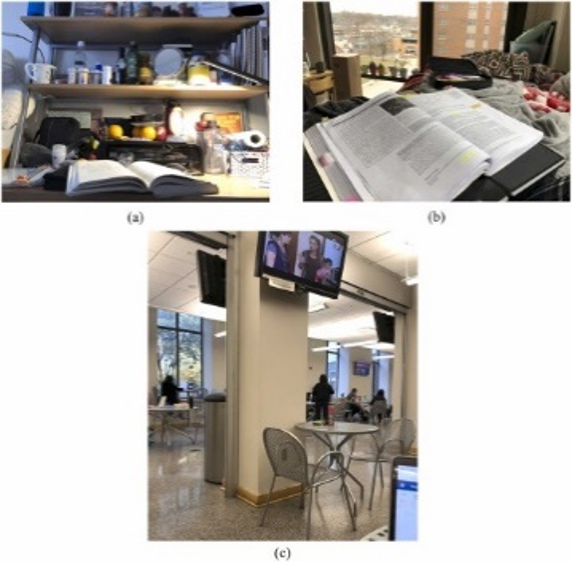
Interestingly, the photos revealed changes not just across the semester but within a single day. One student (below, Figures a-c) transitioned from a cluttered dorm desk to their bed and later to a public study space. These shifts coincided with changes in material, suggesting that public spaces tended to support focused laptop work, while private spaces support comfort and may prompt multitasking.
Five key approaches to improve study environments
So, what does all of this mean for your classroom and students? Across physical, technological and psychosocial features, the research points to some clear actions you both can take. Here are five ways you can translate these findings into practical support for your students:
- Help students audit their own study spaces – even just a few questions about lighting, clutter and distractions can help students identify what is and isn’t working.
- Help students optimise lighting and minimise clutter – encourage students to treat their desk as a workspace, not a storage or relaxation area.
- Encourage small personal touches for motivation – within reason, something that signals “this is my space” can help your students to feel more settled and motivated.
- Prompt students to match study spaces to task demands – not all studying is the same. Your students might find a library suits collaborative study, while a quieter home environment works better for focused reading.
- Share simple checklists for managing tech setups – extra screens and devices can support productivity but can just as easily become a source of distraction. A short checklist (notifications off, unnecessary tabs closed, phone out of reach) can be a good start.
Final Thoughts
It goes without saying that Desirable Difficulties are, indeed, difficult. However, when students understand why these challenges benefit their learning, they are more likely to engage with them rather than avoid them. By explaining how strategies like Retrieval Practice and Spacing strengthen memory and improve long-term retention, we can help students move away from last-minute cramming and towards more effective, evidence-informed study habits. Teaching students about the science of learning encourages them to adopt strategies that feel challenging in the moment but ultimately lead to stronger, more durable learning.